
THE GEOGRAPHY OF MEMORY
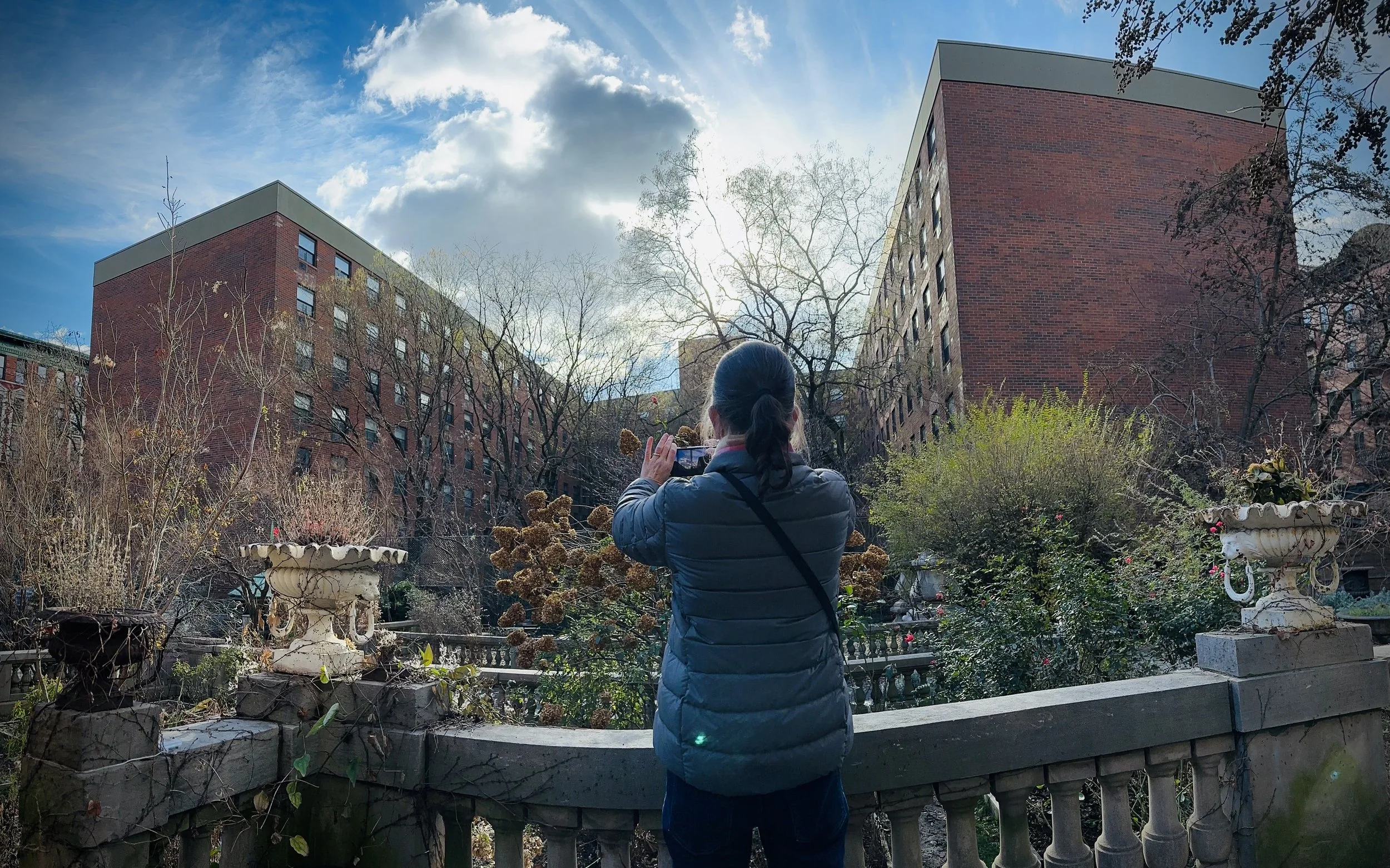
“Paradise is home. Home as it was or home as it should have been. Paradise is one’s own place, one's own people, one's own world, knowing and known, perhaps even loving and loved. Yet every child is cast from paradise-into growth and destruction, into solitude and new community, into vast, ongoing change.”
Octavia E. Butler, Parable of the Talents
We had 25 minutes to evacuate. A wildfire approached, fast and unpredictable. Embers moved through the air in a frantic dance. Inside, my body couldn’t find its rhythm. I moved, then stopped. Reached, then froze. My instincts fractured. Everything held equal weight. How do you choose what to carry when your life has been built through accumulation, repetition, years of embodied experience? I couldn’t imagine my life in fragments. Now I can.
I packed quickly. Dirty clothes mixed with clean. Essentials without meaning. I left behind notebooks, years of choreography ideas, traces of a dancing life. The body remembers, I tell myself. But I wonder what is lost when the artifacts of that memory disappear.
Now we are beginning again. We are in a new home. It does not yet hold our patterns, our gestures, our weight. I move through it, but it does not yet move through me.
I want to move through the house the way I used to. To pass the framed photo of my mother as a toddler beside her twin sister and feel the pause my body always made there. I want to return to the photo of my sister’s engagement party, the heat of that day still somehow alive inside the image. I think about the paintings, one too large for the bedroom, taking up space the way a body insists on being seen. And Mike’s painting, the man on the corner with his hands raised, as if caught in the middle of one of my dance phrases. I recognize that posture. I’ve been inside it.
I keep thinking about repetition. The towels I folded over and over again. The small, unnoticed choreographies of daily life. The habits that live in the body long after the objects are gone. What happens when those objects burn? Where does that movement go? The mirror that once reflected us. My husband’s hats. Our daughter at the beach, captured mid-motion. These images were never still. And now they move differently, only in my memory.
I wonder what the fire did to all of it. Not just the objects, but the gestures attached to them. The weight. The way my body knew how to exist in that space.
In the year after we moved into our Altadena home in 2002, I filmed ten minutes every day, recording ordinary moments with my husband and daughter. That footage now lives on two hard drives—two of the few items I took when we evacuated.
The house was small and carefully designed by Frederick Frankl, a Holocaust survivor who built it in 1948 with his wife, Gertie. Frankl paid close attention to detail, especially to how natural light moved through the house across the seasons. Floor-to-ceiling windows brought the outside in, and the home was built of steel, with a retaining wall for flood protection. It survived extreme winds and past fires and sheltered many families over the decades, including ours for more than twenty years.
Frederick and Gertie were German émigrés who fled Europe. In a book about German refugees after World War II, Gertie recalls that “losing a house was a routine event.” Their homes were lost not by accident, but because they were forced to flee. She describes being ordered to vacate her home within two weeks so Aryan tenants could move in—tenants who then lived there for 24 years. They were constantly moving, trying to escape Europe, until they finally reached Los Angeles. Gertie later said she never truly felt she belonged there. The repeated loss of home left her without a sense of stability or trust. For us, losing our home was not routine. It was sudden and devastating. I feel an unexpected guilt about losing a house that was built with such care, even though that feeling makes little sense.
Before the fire, I had been working on an ongoing multimedia project called The Geography of Memory. Afterward, the fire became one of its central characters, forcing its way into the work in the way disasters often do. The Geography of Memory was no longer just a metaphor; it had become a real place. And the questions I’d been exploring took on a new urgency: Where does memory live? In places, in objects, in shared experience, in the body?
Like all bodies, mine is changing with age. I feel the tension between what I remember being able to do and what is possible now. My body carries memories of movement that no longer align with its present reality. I can imagine how it feels to do a triple pirouette but I don’t have the skills any longer to execute it.
In the first phase of the project, I invited dancers to learn choreography built from everyday actions—making a bed, folding laundry, washing dishes, setting a table. From there, the work grew through writing, improvisation, and conversation. I filmed the dancers in different places, the interactions between them brought new memories and associations into the work.
One location was my former home. The dancers moved through the space paying close attention to its hallways, windows, doorways, and light. They explored every corner together and alone. It became a quiet exchange between the body and the space itself. Now the footage feels like a portal to the past.
Filming movement feels like its own form of choreography. The camera becomes an extension of my body and attention. I follow the dancers, respond to their movements, and continuously decide what to frame and what to leave outside the image. Moving with the camera in response to the dancers opens up a new kind of dance—one that incorporates the slight lag between perception, thought, and movement. What begins as a private, wordless exchange is later shaped into something others can enter and experience for themselves.
The project also includes more than 300 Instagram stories, each under a minute long, collected into a Vimeo showcase. These short sketches are how I learn and develop the visual language I want this project to speak. I work within strict constraints: each piece must be no longer than a minute, filmed and edited entirely on my phone, and posted to Instagram as a story that disappears after 24 hours. This forces me to be less precious, take more risks, and push my imagination further than I think it can go.
Alongside these newer dance films, audio, and writing, I include archival footage I shot more than 20 years ago, ten minutes of my life recorded every day for over a year. Together, they trace how memory overlaps, repeats, and changes over time.
Selections from The Geography of Memory have also been presented as site-specific installations shaped by the spaces around them. In a Brooklyn loft, videos played on loop throughout the building while audiences explored the Instagram archive on laptops with headphones. In a sculpture studio, monitors were tucked among tools, scraps, and unfinished works, as if the videos had surfaced from the debris. At a nature center, dancers performed outside responding to the landscape and guiding audiences through it.
The next phase of the The Geography of Memory explores how homes shape people and how a landscape of home can carry both human fragility and resilience.
Since the Wildfire, one question has followed me constantly: Are you going to rebuild? Rebuilding is necessary, expected even, but it does not fully account for what a home truly is. A home is made of physical structures, furniture, objects, and architecture—the things we can see and touch—but it is also made of memory: fragments we carry, stories others remember, sensations that linger long after the material has disappeared. Home exists as a shifting collage of images, sounds, gestures, emotions, and relationships that continually transform, vanish, and return.
The project will reimagine home from every angle, exploring both the deeply personal and the collective experience of what home means. The physical elements that compose a home will be investigated, researched, and reinterpreted through video, movement, writing, sound, and photography. Stories will be excavated from myself and from others, each connected to a specific object, structure, or space.
A door, for example, can be understood through many lenses: historical, emotional, collective, architectural, and functional. What is a door? When do we enter, and when do we leave? What distinguishes an interior door from an exterior one? What sounds do doors make? What memories emerge when we think about doors? What movements do we associate with them—opening, closing, slamming shut, quietly easing them open, locking, unlocking, leaving them ajar? Where do we hide keys? How might these gestures become movement phrases or choreographic foundations?
When we first returned to the remains of our home, we were astonished to find the wooden swing, where our daughter had played since she was a toddler, still intact. Twenty years earlier, I had filmed her there, counting to 100. That footage now feels inseparable from the landscape of memory itself.
The site carries other histories as well: the Holocaust survivor who built the house in 1948, bookstore owners who once lived there, a family who sold their wedding china and silver to restore its postmodern design. The Geography of Memory will weave these narratives together with the intimacy of my family’s twenty years in the home, tracing how memory and identity are reshaped by upheaval and loss.
Through the layering of movement, sound, and image, I want to evoke what once existed there not by reconstructing a physical structure, but through the unstable ways memory persists. Repeated gestures, shifting narratives, archival and newly created imagery, and voices recalling the site will reveal remembrance as something fleeting and impossible to fully hold in place.
The geography of memory is both external and internal, a place in the world and a private, embodied terrain carried in the muscles and cells. Memory and imagination blur into a landscape that feels both distant and deeply my own. People, objects, and homes become more than one thing at once: part lived experience, part reconstruction, part invention. They belong to a geography that is always shifting, a landscape moving in slow motion beneath our feet.
The world itself is constantly being rearranged, just like memory, and just like a body in motion. Both our inner and outer acts of recollection are unstable, resisting permanence and refusing to remain fixed. Yet we continue to share memories and experiences in an attempt to locate ourselves in space and time. This project embraces that impermanence and the subtle ways memories persist, shaping how we understand the past, the future, and ourselves in those stories.
Geography of Memory Vimeo Showcase
One aspect of the Geography of Memory project involves a dedicated effort to produce one-minute videos crafted from footage I collect during my daily life and travels. These videos were originally shared on Instagram as stories, disappearing after 24 hours. However, they can now be viewed in a Vimeo Showcase linked below. At the core of this work is a collaboration with my good friend, David Shohl, a prolific and talented composer whom I have known since our college days.
Video Sketches
“The task for the right eye is to peer into the telescope, while the left eye peers into the microscope.” - Leonora Carrington

Sketch
Roz & Laura
Sketch
Miriam
Sketch
Sol
Sketch
Roz, Stephanie, & Laura
Katrina and Matt
Hallways
House
HOME IS A HARD DRIVE IN MY BRAIN. by Nuala Sanchez
I think about being a child.
I think about using the landline to call my best friend’s house. I can hear her mother answer and I ask nicely if she can come over.
I think about looking out the window in the evening and seeing the headlights of my dad’s car pulling into the driveway. My mother tells me to set the table.
I think about pushing the cart at the grocery store while my mom shops. I can taste strawberry Häagen-Dazs ice cream.
I think about waking up in the morning. I can hear footsteps descending the stairs and I know who they belong to.
And now, I am far away. My hair has grown, my skin is paler, my fingers have tapered.
Sometimes I’ll happen upon a familiar smell, in a friend’s apartment, on a stranger’s jacket, and feel myself transported. To somewhere I know well but can’t quite place. And for a small moment I am a child again.
I like to close my eyes and walk around the house. I open every cabinet and every drawer. I’m not looking for anything, I just like to know everything is in its place. Hair ties in the drawer to the left of the bathroom sink. Aluminum foil in the third drawer by the oven. My mother’s wedding dress in her closet. Batteries. Napkins. Band-aids. My ballet slippers.
I make as much noise as possible. I pull a chair out from the table to hear it screech against the floor. I shake a bottle of vitamins. Flip through pages of a coffee table book. Turn on the shower.
I switch the latch and open the back door. Let it slam behind me. Skid down the concrete steps. Standing in the grass, looking up at the oak trees. A canopy of leaves covering the sky.
An ocean of green ivy at my ankles. Wobbly brick steps lead deeper into the yard. I look down at my feet as I maneuver through.
Thick red rope tied onto a plywood two by four. Hooks wedged into the overhanging tree branch. My dad built this swing for me when I was five.
I turn back to the house. The sun has started to set and through the window I see my father turn on a lamp in the living room. I look to the window of my mother’s office. She sits in front of her computer, blue light glowing onto her skin. She switches off the screen and swivels out of her chair. The back door swings open and my dad calls out to me. Dinner’s ready.
I open my eyes. In front of me is the swing again. The piece of wood now coated with a thick layer of ash, the red rope faded and tattered. It’s the only thing I still recognize. There was once a fence that separated our property from our neighbors behind us. Now I can see all the way to the next street. A white pick-up truck drives by.
Looking at the house, a strange skeleton stands before me, made up of steel beams indicating the separation of rooms. The oak trees, black and wiry. Everything has become the same color. Even the same texture.
I can hear my own breath exhale. It gets caught inside my mask and swims up to my goggles, fogging my vision. Looking down at my feet, I trudge back up the broken path.
In between the steel frames, I see the white silhouette of my father in his hazmat suit. He lowers himself through the floor beams into the cavernous pit of rubble. I crouch by the window as he sifts through.
It becomes a search for old curiosities. My dad uncovers something from the ash and carefully places it in my hands. A vase. A mug. A bowl covered in tiny cracks, but still intact. An archaeological dig of our past life.
I have been asked if there is one thing I miss most. An item from the house I wish we had saved. But when I think about taking one thing it feels like ripping a page out of a book.
Home was an entire wall of bookshelves. There were books lining the walls of the living room, of my bedroom, beneath the coffee table. Of painters, photographers, filmmakers, historians.
Home was a long hallway of photographs. Of my grandparents and old city maps. Of pictures my dad shot and developed in his darkroom.
Home was the mountains. Seeing them get closer as we drove home. Watching them turn purple as the sun set. From the kitchen window they felt so near you could almost reach out and touch them.
My dad and I collect our findings and load them into the trunk of the car. We peel off our hazmat suits and gloves and sit in the car for a moment. Parked in the driveway, we stare out at the house.
He begins to imagine what a new home might look like on this same plot of land. Something small and simple. Creative ways to be more sustainable and use new materials. Making sure we still have a view of the mountains.
As we look out at the house, two little birds float down from the avocado tree. In tandem, they fly towards the wide opening in the steel beams, where the window to the living room once was. Seamlessly they fly into the living room and out through the back window into the yard.
My dad drives away and in the passenger seat I close my eyes again.
I return to the house. All of the cabinets and drawers had been opened and so I carefully close them. I take stock of their contents before closing each one. Rubber bands, potato chips, film stock, notebooks. The sun has set, I dim the lights. Testing my memory again, I imagine each light switch, on and off, on and off.
I think about the two little birds. I see them fly through the living room again. Through my bedroom and the bathroom. It’s theirs now.
My dad continues driving through LA traffic. Eventually he is driving me to the airport. My flight back to New York. The city of my separate life.
Weeks later I am standing in the corner of a gallery space in Brooklyn. A show that had taken me weeks to organize. A room of projections showing my mother’s work. I wish she was beside me and not on the other side of the country.
In my pocket, I feel my phone buzz every few minutes. Venmo donations to my hometown as guests arrive.
Playing on the screen is a dancer my mother had choreographed. She’s in our front yard, moving around the bamboo and the avocado trees. The bright blue front door just behind her.
To a friend next to me I whisper, It’s all right there. She smiles, So great you have the videos.
And she’s right. I am lucky for the well of evidence to my memories. But what I meant really was it’s all still there. We see it projected across the wall, but it is also forever inside my head.
Inside my head, I have every birthday party.
I have every fight with my parents. Every time I cried in the shower. Every Christmas morning.
I have every iteration of the house. The different couches and dining room chairs. Every crazy color I painted the walls of my room.
Inside my head, there is a child. In some ways she is me, but in many ways she is not. And I am lucky to have her memories.
Nuala Sanchez is a director, writer, and photographer originally from Altadena, CA and currently based in Brooklyn, NY.

Bio:
Mary Trunk is a multimedia artist based in Los Angeles, California, formerly based in Altadena until her home was destroyed in a wildfire. Her recent project, Geography of Memory, is an ongoing, deep inquiry into memory, where it lives, why we need it, and how it shapes the narrative of how we live. Impermanence and change are recurring themes, and different iterations of Geography of Memory have been presented as one-time-only pop-up shows.
Her documentary films explore the unraveling of her own family, the choices women face in balancing motherhood and artistic life, the aging of dancers, meditation practices in prisons, architectural influences, and the complexities of the creative process. Her experimental videos and screen-dances reframe overlooked details of daily life, transforming the ordinary and creating a new context in which objects and people can be more than one thing.