The Geography of Memory
About Home Fire and Change Exhibitions/Installations/Screenings Send a message
AboutHomeFire and ChangeExhibitions/Installations/ScreeningsSend a message
The Geography of Memory
image-asset.jpg
1 2 3 4 5 6 7 8 9 10
Previous Next
image-asset.jpg

February 11. 2026

NO BODY IS PRESENT

Is my body present? Is my mind present? Awake means awake. Not a funeral. A memorial is when no one is present—no body. Do you need a body? Do we need a body? When it’s taken away, it feels like the worst thing imaginable.

That’s different from limitations. Limitations you work with. Maybe you’re not as flexible as the dancer next to you, but you still have control. You can almost figure out how to make it look like you have extension when you don’t. The body has a mind of its own. Because the mind has been altered—by what remains unclear. At least for me.

When my mother died, we didn’t have a funeral. We didn’t do anything until several months later. Scratch that—we did a lot of planning. She died suddenly. Or rather, we thought she did. She had been dying for years. After reading her journals, I realized she had suffered many heart attacks. I began to remember how she looked when she felt unwell and wondered if those were the moments it was happening. Apparently, some heart attacks don’t look like what we expect. No clutching of the chest. Just nausea. Just exhaustion. Just wanting to give up.

My uncle convinced me we should have a memorial at his church in Long Island. We didn’t live there—my mother hadn’t either—but I agreed. What is a memorial for, anyway? So we went. The church was full. Most of the people didn’t know me. Most of them hadn’t known my mother. But there was a small group of us who were bound together.

No one knew I was pregnant with Nuala. I cried through the entire service. My uncle even asked, “Are you okay?” I must have looked unhinged. What could I say? I’m pregnant. I’ve lost my mother.

Afterward, we went back to his house to bury her ashes in his yard. I’m not sure how that decision was made. It doesn’t really matter. We stood in a circle while someone dug a small hole. The ashes were in a box—metal and wood, I think. Joe said something beautiful. I can’t remember the words, only the feeling of them. As we walked away from the covered earth, my uncle began to cry and cry and cry. I watched him do what I had done in the church. Joe put his arms around him.

It was summer. It was hot. I don’t remember much after that. I stayed at the house with several of my siblings. I slept on a pullout couch with someone else. I was so uncomfortable. Maggie, who had been pregnant twice already, knew. She massaged my back. It was an extraordinary kindness. It helped me sleep.

That same weekend, my mother’s cousin had a wake. Her death felt sudden to me. I hadn’t known her well, but my sister had. We went. There was an open casket. I could barely look at her. She didn’t look like herself—didn’t look like a person I recognized. Why do we do this? I stood in the back, waiting to leave. Her children stood near the casket, stunned. I felt for them. What could we possibly say to each other? We had both lost our mothers.

This is not how I remember people. At least not the ones I love deeply. A body in a box closes something down. But memory doesn’t close. It keeps moving. It shifts and changes and returns.

A memorial is when there is no body present. And a memory doesn’t need it.

Photo: My mother, Paula, standing, her twin sister, Florence, in the tub.


February 20, 2026


STRIPES

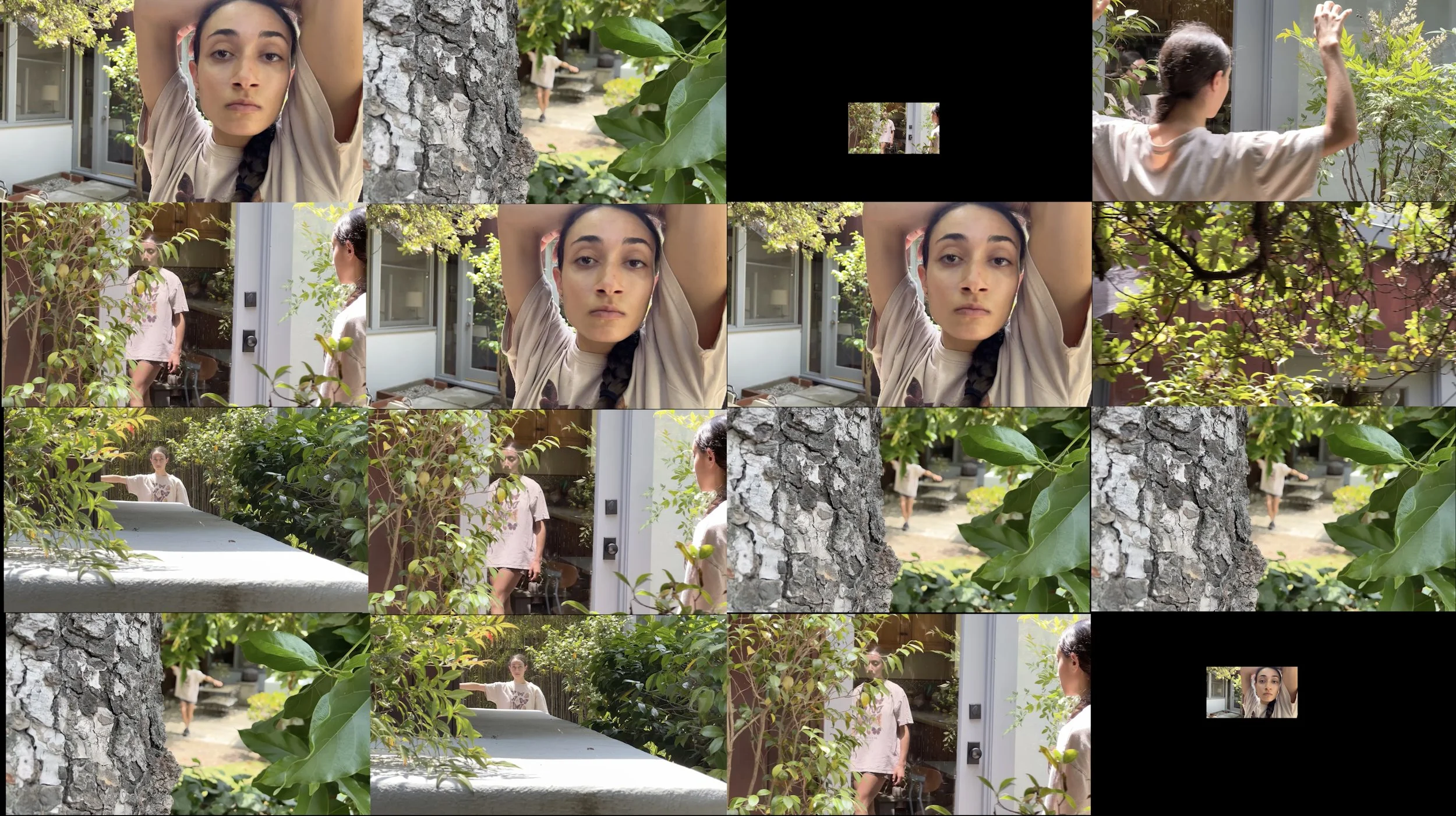
Imagination rearranges memory into story. For me it is the fragments—images, sensations, losses of our memories that help us understand what is possible, who we might become, and how the past continues to shape us. Stories are scaffolding that push our imagination to make sense of the past and dream.

After my home burned, my mind kept returning to the twenty years we lived there. I would wander through the rooms in my memory, cataloging what had once filled them. Recently I remembered a Polaroid I took when my daughter was a baby. She wore a colorful striped jumper, and I asked Paul to hold her in front of a giant striped poster I’d rescued from a Gap store window when employees were discarding it. Her outfit nearly matched the stripes behind her. I framed that Polaroid—no negative, no backup—and it hung in our kitchen for years, just beneath the paper towel holder.

I thought I had photographed it with my phone. I hadn’t. What I did find was footage I once shot of dancers moving through that same kitchen. In a single frame, the photo appears in the background. I captured a screenshot. It is blurry, almost illegible. It isn’t even where I remembered it hanging. I was certain only Paul’s arms were visible in the image but his torso and head are there. When I zoom in, the figures dissolve into haze—stripes, shadows, the faint suggestion of bodies. It looks the way memory feels: faded, unstable, on the verge of disappearing.

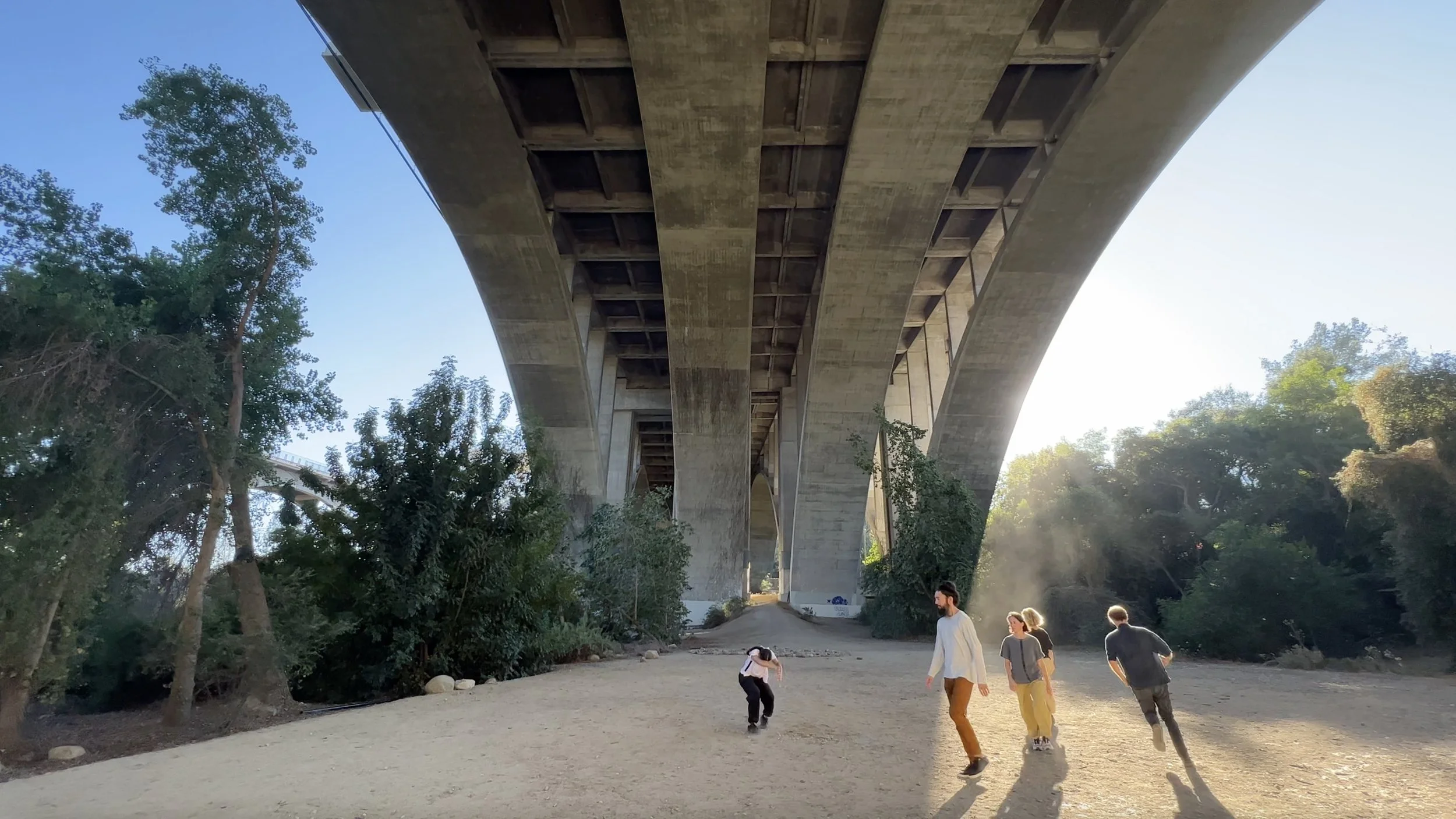
Because the original photo is gone and survives only as a smudge within a video, it has taken on a strange gravity. My imagination has already revised it and will continue to do so. The image now folds into other memories—of when I was a dancer, of asking my middle-aged friends to dance in that kitchen. Their movements feel like echoes of the blurred photograph, and yet they are not echoes at all. They are something new—less a reconstruction of what was than a response to what the future is asking of them.

The lost photo becomes a kind of ghost, a metaphor spacious enough to hold more than my own remembering. Others might see something entirely different in that faint cluster of stripes and forms. What remains is barely visible, but it is enough. Enough for imagination to enter. Enough to imagine what was there or what could be there.